From Limited Quantities to Real Volume: What Mature Brands Need Before Scaling Production
A limited drop can make a brand look sharp. Real volume is where the pressure gets real.
That is the part a lot of teams find out late. The first run lands well. The visuals hit. The hoodie has the right body. The washed tee feels lived-in instead of fake-aged. The denim stacks the way the design team wanted. Then demand shows up, or a retailer asks for more depth, or a second market wants the same program, and suddenly the conversation changes. It is no longer about whether the product looks good in a small, controlled run. It is about whether that same product can survive more fabric lots, more sizes, more wash loads, more trims, more deadlines, and a much smaller margin for drift.
What sounds like a volume problem usually is not just a volume problem. It is a structure problem. Streetwear brands with proven sell-through do not get stuck because they lack ideas. They get stuck because the things that made the first run feel right, shape, weight, print balance, wash mood, pocket placement, trim choice, release timing, were never fully built into a production system. That is why scaling production is one of the clearest dividing lines between a brand that had one strong moment and a brand that is building a repeatable product world.
Why does the jump from limited quantities to real volume catch so many brands off guard?
The jump feels sudden because a small run can hide weak systems. Once brands scale, the same style has to hold its shape, finish, and timing across more variables, and that is where overlooked issues become structural. The product may still look the same on paper while behaving very differently in production.
A lot of early success in streetwear comes from tight control. The founder is watching every sample. The graphic gets nudged one more inch because it feels off. The wash gets another round because it still looks too new. A heavyweight hoodie gets re-cut because the shoulder did not drop the right way. In a limited run, that level of attention can carry the product.
Real volume does not work like that. Once a program gets bigger, personal attention stops being enough. The product has to survive the system around it. That means the pattern has to be locked more precisely. The fabric has to be booked with better timing. The graphic placement cannot live only in someone’s visual memory. The wash outcome cannot depend on one unusually good test. If those things are still loose, volume exposes them fast.
This is why established streetwear brands and independent brands with real traction often hit a strange moment: demand is no longer the problem, but the operation behind the product is not ready for the next step. What looked like momentum becomes friction. The product team starts asking harder questions. Can this fit still land after grading? Will this rib hold after wash? Are we actually sure about the base fabric, or are we just hoping the next lot feels close enough?
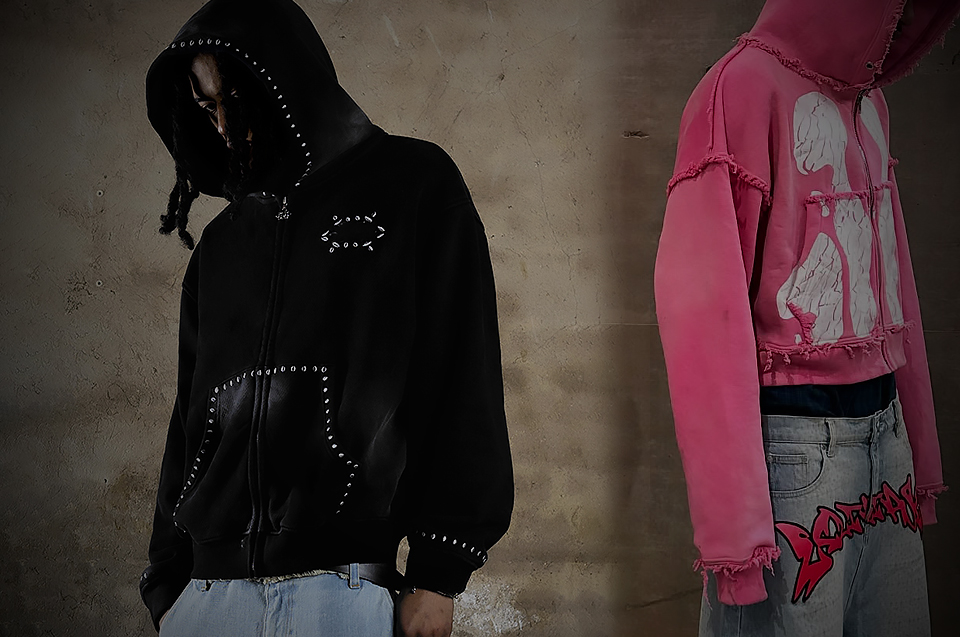
That shift matters because streetwear is not judged like generic apparel. Consumers notice when the silhouette loses bite. They notice when a vintage tee starts reading like a promo shirt. They notice when a washed zip hoodie looks flatter, cleaner, and less intentional than the approved sample. At that point, scaling is not just about making more units. It is about protecting the product language that made the style work in the first place.
What changes inside the product once a drop moves beyond controlled launch quantities?
What changes first is not always the design itself. What changes is the number of variables touching the design. More sizes, more fabric lots, more wash cycles, more trims, and tighter scheduling all put pressure on the exact details that made the first run feel convincing and commercially sharp.
A washed boxy hoodie in a controlled run is one thing. That same hoodie across a wider size curve, a bigger fabric reservation, and a stricter launch date is another. The hood volume may start to collapse. The rib may recover differently. The body may lose some of the stance that gave the sample its presence. None of those changes sound dramatic in isolation. Together, they change how the product reads on body.
The same thing happens across categories. A cropped football-inspired jersey can lose its proportion if the shoulder drop and body length are not translated carefully into grading. A distress-heavy zip hoodie can look cheap instead of layered if the distressing is treated like surface damage instead of part of the garment’s visual age. A flare denim style can lose its intended stack if rise, knee position, wash shrink response, and hem behavior are not being controlled together.
That is the key point: streetwear products do not scale as flat templates. They scale as combinations of structure, material, surface, and styling logic. Once brands move into recurring seasonal production, the product has to survive all four at the same time.
This is also why the cleanest-looking pieces are often the most dangerous to scale badly. A quiet heavyweight crewneck, a boxy tee, or a straight-leg sweatpant can seem simple until volume exposes all the unglamorous controls underneath. If the fabric weight is off, people feel it. If the drape changes after finishing, people see it. If the graphic sits half an inch too high, the whole front balance reads wrong. Streetwear has a very low tolerance for products that are technically acceptable but visually dead.
Where do brands usually lose control first when volume goes up?
Brands usually lose control at the handoff points. The first weak spots are often fabric reservation, grading, trim continuity, wash translation, and graphic placement rules. These are not glamorous topics, but they are exactly where a promising style can lose its tension once the order stops being tightly managed by hand.
The first failure point is often material continuity. A brand approves one fabric hand feel, one recovery behavior, one surface texture. Then the broader run introduces a slightly different lot, a slightly different knit response, or a slightly different post-wash behavior. The style still exists, but it no longer lands the same way.
The second failure point is grading. A sample in one size can look great and still tell you very little about what happens when the program spreads across the size range. Streetwear sizing is not just math. Oversized, boxy, dropped-shoulder, and stacked silhouettes all require proportion logic. If the factory treats grading like a basic technical expansion instead of a silhouette-preservation exercise, the product starts drifting as soon as more sizes come into play.
The third failure point is trim continuity. Zippers, drawcords, snaps, patch bases, labels, and hardware are easy to underestimate when teams are focused on the main garment. But streetwear often depends on detail weight and material honesty. A trim switch does not have to be dramatic to be damaging. A lighter zipper, a glossier patch base, a softer cord, or slightly wrong hardware tone can push a product away from the mood the brand originally approved.
The fourth is process translation. A lot of brands still underestimate how much goes wrong between sample approval and full production. That is why it helps to treat tech pack preparation for bulk streetwear manufacturing as a scaling tool, not a paperwork task. The point is not to create more documents. The point is to make sure fit logic, material choices, print positions, finish notes, and approval boundaries are clear enough that the product does not depend on guesswork once the run gets bigger.
The fifth is release pressure. Once the calendar tightens, teams start making quiet compromises. They accept a trim that is “close.” They skip another wash test. They assume the pocket placement is fine because it looked fine last time. That is how a style stops being the style everyone originally wanted.
What should procurement teams check before they commit a proven style to bigger numbers?
Procurement teams should check whether the style is system-ready, not just sample-approved. That means reviewing material booking, grading logic, process sequencing, approval checkpoints, trim exposure, and timing risk before the order grows. A successful first run is useful evidence, but it is not the same thing as scale readiness.
The first question is simple: what exactly made the style work? Was it the base silhouette? The wash depth? The placement balance? The fabric density? The patch construction? If the team cannot answer that clearly, they are not ready to scale the style. They are still reacting to a result, not controlling a repeatable product.
The second question is whether the style has been tested under the right conditions. Not just “Did the sample look good?” but “Did the sample prove the risky parts?” Was the wash tested on the actual base fabric? Was the graphic placement tested on the real size and fit? Was the embroidery density tested against the garment weight? Was the trim selected early enough to avoid last-minute substitution?
The third question is whether the process order has been defined properly. In streetwear, the sequence matters. Print before wash behaves differently than print after wash. Embroidery before distressing creates a different surface than embroidery after fading. Patchwork, rhinestones, crack print, puff print, and garment dye all push on the product differently. Teams that scale without locking the right sequence are often surprised when the product feels technically finished but visually weaker.
The fourth question is who is flagging risk. A passive factory can still produce a nice sample. That does not mean it is the right structure for a broader program. At this stage, procurement teams need partners that can point out where the approved shape may drift, where the fabric may behave differently in larger reservation volumes, and where the wash or decoration may create pressure on delivery timing.
The fifth question is whether replenishment is part of the conversation. Mature brands are rarely scaling only for one big order. They are usually thinking about what happens if the style sells. That is why a one-time production answer is not enough. The system has to support future depth, not just the next shipment.
How do fit, fabric weight, and finish turn into real scaling issues?
Fit, fabric weight, and finish become scaling issues because they are the first things the customer feels without needing technical language. When volume goes up, small shifts in body, drape, shrink response, surface texture, or visual age become easier to notice, harder to correct, and more expensive to explain away after launch.
Streetwear fit is identity. That sounds obvious, but it is still where many scaling plans get too generic. A boxy tee is not just a wider tee. A dropped-shoulder hoodie is not just a hoodie with extra room. A flare denim silhouette is not just a bigger hem opening. These are shape systems. When the pattern logic is weak, the product starts losing its voice.
Fabric weight works the same way. The right GSM is not a number for a spec sheet. It is what decides whether the garment stands off the body, collapses too softly, or lands with the intended tension. For tees, that often lives in the 180–400gsm range, with heavyweight options more narrowly suited to certain silhouettes and seasons. For hoodies and sweatshirts, structure becomes more critical as weight rises, especially when the brand wants real body, clean hood volume, and finish depth rather than softness alone.
Then there is finishing. Streetwear finishing is not decoration on top of the product. It is part of the product. Acid wash, enzyme wash, stone wash, ozone wash, fading, abrasion, crack print, puff print, patch layering, embroidery, and rhinestone work all change how the garment is read. The wrong wash can make a graphic feel too new. The wrong print hand can make a heavyweight tee feel cheap. The wrong distressing can turn a premium hoodie into a costume version of itself.
That is why teams scaling washed and decorated categories should study advanced streetwear washing workflows as a production issue, not just a style reference. The useful question is never “Can the factory do acid wash?” The useful question is whether the wash, the fabric, the print, and the silhouette still read as one complete product after the full process is finished.
What kind of factory structure actually supports a streetwear brand at this stage?
The right factory structure is not defined by output alone. It is defined by whether it can protect high-detail pieces and clean essentials under the same production pressure. At scale, the strongest setups combine pattern discipline, material control, process planning, approval logic, and a real understanding of how streetwear products are judged in market.
This is where a lot of sourcing conversations get clearer. Brands do not just need a factory that can “make hoodies” or “make denim.” They need a factory structure that understands what makes a streetwear hoodie feel premium, what makes a washed tee feel believable, and what makes a statement jacket still look intentional once the program is no longer tiny.
From a sourcing standpoint, reference-grade streetwear manufacturing is not about flashy technique alone. It is about whether a factory can run both ends of the spectrum in bulk: clean cut-and-sew essentials where the fit has to land with zero drama, and process-heavy pieces where wash, decoration, and silhouette all need to work together. Groovecolor is one example of that type of custom streetwear clothing manufacturer: China-based, built around heavyweight and wash-intensive categories, able to move from strategic test quantities into real scale, and backed by broader systems such as an eight-step quality framework, SMETA 4P compliance, and monthly capacity that can reach 300,000 pieces when a validated style needs depth.
That kind of structure matters because mature brands are not simply choosing between “cheap” and “expensive,” or “local” and “overseas.” They are deciding what kind of production logic they need. In many cases, the smartest move is not the biggest factory or the lowest quote. It is the factory that understands streetwear as a product language, not just an apparel category.
For teams comparing options, a recent breakdown of specialized streetwear manufacturers can be useful because it helps separate general garment capacity from true category fit. And when procurement teams need to look beyond product and into operational trust, SMETA 4-Pillar social compliance frameworks are worth reviewing as part of the broader risk picture, especially for US, UK, and EU streetwear labels sourcing through China for recurring seasonal programs.
Why do release timing and replenishment logic matter as much as pure output?
Output only matters if it arrives inside the brand’s commercial rhythm. In modern streetwear, timing is part of product value. A style that lands late, misses a cultural window, or cannot be replenished cleanly after early sell-through can underperform even if the garment itself is technically well made.
Streetwear brands do not sell in a vacuum. A washed zip hoodie tied to a fall story does not have the same job in January that it had in November. A sports-inspired jersey connected to a visual campaign does not hit the same way if the drop misses the conversation around it. A clean heavyweight crewneck built to sit inside a broader essentials program loses value if the replenishment lag breaks the program’s rhythm.
That is why scale decisions have to include time. Sampling speed matters. Material booking matters. Pre-production readiness matters. International shipping logic matters. Replenishment planning matters. In less optimized apparel systems, the path from final tech pack to delivered goods can drag long enough to kill momentum. For a mature streetwear brand, that is not a side issue. That is the difference between turning demand into a real business cycle and letting demand cool off while the supply chain catches up.
This is also where brands need to be honest about what they are scaling. Are they scaling one proven hero with strong signals? Are they widening an already validated program? Or are they trying to push too many half-settled ideas into production at once? Volume looks exciting from the outside, but inside the business it can turn into noise fast if the style architecture is still unstable.
The best scaling plans are usually boring in the right way. One or two proven silhouettes. Locked material logic. Clear approval boundaries. Replenishment triggers. Enough production depth to respond if the market wants more. No fantasy. No chaos. Just a better match between product ambition and operational maturity.
What should mature brands fix before the next scale-up decision?
Before scaling again, mature brands should fix anything that still depends on memory, improvisation, or founder intuition alone. If the product only lands when the exact same people are watching every detail by hand, the brand does not have a scaling system yet. It has a temporary success pattern.
The first fix is clarity. Define what makes the style work in plain language. Not mood-board language. Not internal shorthand. Real language the factory, the product team, and the sourcing side can all act on. Which fit points are non-negotiable? Which finish cues make the garment feel right? Which trim details carry more importance than they first appear to?
The second fix is sequencing. Map the real path from pattern review to fabric sourcing to sampling to process testing to pre-production to bulk to inspection. If the brand only knows the broad stages but not the fragile points inside them, the program is still too exposed.
The third fix is decision ownership. Someone has to own fit. Someone has to own surface outcome. Someone has to own release timing. Someone has to own trim risk. Once brands scale, “everybody is sort of watching it” becomes a very expensive management style.
The fourth fix is product discipline. Not every promising style deserves bigger numbers. Some pieces are test pieces. Some are signal pieces. Some are hero pieces that can carry real scale. Mature brands get stronger when they know the difference. The goal is not to scale everything. The goal is to scale the right product with the right system behind it.
The fifth fix is partner fit. A factory that looked fine when the order was small may not be the right structure once the brand needs multiple launches, cleaner replenishment, stronger process control, and more confident execution across fit, weight, and finish. That is not failure. That is a normal change in operational needs. But it has to be recognized early, before the brand starts forcing bigger programs through a production setup that was never built for them.
For streetwear brands entering this phase, the decision is less about finding a cheaper factory and more about aligning with a manufacturing structure that understands the long-term cost of product drift, weak timing, and quiet compromises. Limited quantities can prove demand. Real volume proves whether the brand has built a product system strong enough to carry its identity forward.
Jacket vs Coat | Outerwear Development Insights for Fashion Brands
Some outerwear decisions look easy on the rack and get messy the second development starts. A cropped jacket with shape, hardware, lining, and a clean shoulder sounds manageable until fabric stiffness changes the body, trim weight pulls the front off balance, and the sample suddenly stops feeling like the sketch. A coat brings a different kind of pressure. Longer length means more fabric behavior to control, more structure to hold, and more room for small errors to become very visible.
That is why "jacket vs coat" is not a basic styling question for established streetwear brands or fashion labels with real product ambition. It is a category decision tied to pattern logic, fabric weight, finishing, factory strengths, and how the product needs to land in photos, on body, and in bulk production. This piece should help creative teams, product developers, and sourcing teams read that decision more clearly, moving beyond simple aesthetics into the realm of technical execution and supply chain reality.
When does a jacket make more sense than a coat for a modern streetwear line?
A jacket usually makes more sense when the brand needs sharper styling flexibility, easier seasonal layering, lower pattern risk, and faster visual impact. In streetwear, jackets often carry more drop-friendly energy because they can hold strong shape, trim detail, and graphic identity without the longer balance challenges that coats create.
Shorter outerwear often fits streetwear wardrobes more naturally. Bombers, varsity jackets, zip jackets, workwear jackets, and cropped outerwear photograph well and offer a tighter visual frame. Jackets let brands push rib contrast, appliqué, patchwork, embroidery, washed canvas, denim fading, and oversized shoulder shape with less risk of overwhelming the wearer. When the collection already features washed hoodies, baggy denim, cropped jerseys, or wide-leg bottoms, a jacket is often the better category to complete the look without burying the lower half of the outfit.
Manufacturing a jacket is not necessarily easy, but it usually gives brands tighter control over body proportion, hem break, sleeve volume, zipper balance, pocket placement, and the lining and shell relationship. A cropped varsity with visual weight or a washed work jacket with cleaner body control can sit right over a hoodie, letting the pants do more of the talking. This balance is critical for brands focusing on a complete silhouette rather than just a top-heavy statement. The reality of streetwear manufacturing is that brands need these pieces to be repeatable and scalable. When you introduce complex washes or heavy distressing to a jacket, the smaller surface area allows a specialized streetwear factory to maintain sample-to-bulk consistency much more effectively than on a full-length coat.
Furthermore, jackets offer a distinct advantage when it comes to seasonal drops. A heavy cotton canvas work jacket can bridge the gap between late fall and early winter, while a lighter nylon bomber can serve as a staple for spring. This versatility means that procurement teams can often negotiate better terms with their production partner for streetwear brands by grouping similar styles or fabrics across multiple seasons, reducing the overall development cost and time. This strategic approach to outerwear planning ensures that the brand remains agile and responsive to shifting market demands without compromising on product integrity.
When does a coat create stronger value than a jacket, and when does it quietly create more risk?
A coat creates stronger value when a brand wants more presence, more silhouette drama, and a more elevated outerwear statement. It also creates more risk because longer length, larger fabric surface, heavier structure, and more visible front balance issues make weak development show up faster and more obviously.
Coats feel more directional, more fashion-led, and sometimes more premium. A well-executed coat can lift a collection beyond hoodies and basics, changing the body's visual rhythm. Coats work exceptionally well when brands want cleaner drama, stronger shape language, more editorial styling, or a more elevated winter category. They provide a larger canvas for texture and drape, commanding attention in a way that shorter pieces often cannot. A long wool-blend overcoat or a heavily padded technical parka instantly communicates a higher price point and a more mature design language, signaling to the consumer that the brand has evolved beyond simple cut-and-sew basics.
However, the manufacturing risk points multiply with length. Front drop and hem balance, collar stand behavior, shoulder fall, lining drag, interlining choices, fabric memory, weight distribution, button and placket stress, and longer panel distortion during sewing and finishing all become critical factors. The coat is where a lot of factories start looking less capable than their sample photos suggest. If a specialized manufacturer for custom streetwear does not have strong pattern control, a coat can quickly lose its intended shape and look like a shapeless blanket, severely damaging the brand's reputation for quality.
The challenge deepens when incorporating streetwear elements into a traditional coat silhouette. Adding heavy hardware, oversized cargo pockets, or complex embroidery to a long coat requires a deep understanding of weight distribution. If the factory simply scales up a jacket pattern, the resulting coat will likely suffer from sagging shoulders or a hem that kicks out awkwardly at the back. This is why established streetwear brands must rigorously vet their production partners, ensuring they have specific experience with longer, heavier garments that demand precise structural engineering and advanced finishing techniques.
How do silhouette and fabric decide whether a design should become a jacket or a coat?
The jacket-versus-coat decision is often made by silhouette and fabric before styling language finishes the conversation. Once fabric weight, drape, surface texture, and intended body volume are clear, the product usually starts telling the team whether it wants to live as a shorter outerwear piece or a longer one.
Stiff versus fluid fabrics play a major role in this decision. Compact wool-like fabrics, washed canvas, denim, nylon, and padded constructions all behave differently. Fabric weight changes shoulder shape, and surface texture affects visual age and outerwear identity. Some concepts collapse when length increases, while others only become convincing once length is extended. The interplay between the chosen material and the desired silhouette is the foundational step in outerwear development, setting the stage for all subsequent design and manufacturing decisions.
For example, a washed canvas shell with visible seam character may work better as a jacket, where the stiffness supports a boxy fit. A brushed or smoother structured coating fabric may justify coat length, allowing for elegant drape. A heavily decorated or patch-heavy outerwear concept may become too busy as a full coat, whereas a cleaner, darker, lengthened piece may carry stronger runway or editorial energy. This matters significantly when worn over heavyweight hoodies, boxy sweatshirts, football jerseys, double-knee pants, or stacked denim. The outerwear must complement, not conflict with, the underlying layers.
How does shell fabric change the body of outerwear before trims are even added?
Before zippers, buttons, or drawstrings are attached, the shell fabric dictates the garment's natural resting state. Heavyweight denim or stiff canvas will hold a rigid boxy shape, fighting against gravity, which is ideal for cropped streetwear jackets. Conversely, softer wool blends or drapey nylons will surrender to gravity, requiring strategic interlining to maintain shoulder structure in a longer coat. The fabric's inherent tension and memory decide how much pattern engineering is needed just to make the garment hang correctly on the body. A fabric that looks incredible on a small swatch might completely fail when draped over 40 inches of a coat's back panel, highlighting the critical importance of full-scale prototyping.
Which fabrics hold jacket energy better, and which ones justify coat length?
Fabrics that hold jacket energy better typically have higher structural integrity over short distances—think 14oz raw denim, heavy duck canvas, or densely woven nylon twill. These materials create the sharp, aggressive silhouettes favored in streetwear. Fabrics that justify coat length need to balance weight with movement. Melton wool, heavy gabardine, or technically coated cotton blends offer enough substance to look premium while allowing the longer panels to flow as the wearer walks, rather than creating a stiff, restrictive tube. Understanding these material behaviors is what separates a successful product launch from a costly development failure.
Where do brand teams usually misjudge outerwear development when they compare jackets and coats?
Brand teams usually misjudge outerwear development when they compare jackets and coats only through styling boards, not through pattern behavior, trim weight, lining logic, and sampling difficulty. What looks like a simple category choice on paper often becomes a very different production problem once fit, construction, and finishing enter the room.
Common mistakes include choosing by trend mood only, ignoring factory specialization, treating outerwear like an oversized hoodie category, underestimating pattern revision cycles, overlooking lining, filling, facing, and interlining logic, and assuming longer length only means "more fabric." These misjudgments lead to wasted time and budget. A design team might sketch a beautiful oversized parka, but if they fail to account for the weight of the insulation and the necessary structural reinforcements in the shoulders, the final product will pull uncomfortably on the wearer's neck, rendering it unwearable despite its visual appeal.
During tech pack review, pattern development, shell and lining matching, trim sourcing, and sampling, these issues become painfully apparent. Wash or finish testing, bulk cutting, final pressing, and inspection checkpoints are where theoretical designs meet physical reality. Many teams realize too late that the original design was not weak. The development path was. A recent breakdown of specialized streetwear apparel manufacturers often highlights that successful outerwear requires a deep understanding of how materials interact under tension and weight, a nuance frequently overlooked by less experienced sourcing teams.
Furthermore, misjudging the sampling timeline is a frequent error. A complex coat with multiple layers, custom hardware, and specific wash requirements will almost always require more sampling rounds than a standard zip-up jacket. Brands that fail to build this extra time into their production schedule often find themselves rushing the final approval, leading to disastrous sample-to-bulk inconsistencies that can derail an entire seasonal launch.
What separates a factory that can handle jackets from one that can really handle coats?
A factory that can handle jackets is not automatically ready for coats. Coats demand stronger pattern control, cleaner structure management, better front balance handling, and tighter finishing discipline because longer garments make construction problems easier to see and harder to hide.
When evaluating a production partner, brands must look at outerwear pattern capability, experience with longer silhouettes, shell and lining coordination, collar and lapel control, pressing quality, trim sourcing depth, and the ability to hold shape through sampling and bulk production. Experience with heavy or structure-sensitive fabrics is non-negotiable. A factory might excel at producing flawless bomber jackets but completely fail when tasked with a tailored topcoat because the required skill sets—particularly in pressing and internal structuring—are vastly different.
Specialist outerwear factories and streetwear manufacturers with stronger outerwear development depth understand these nuances. Teams used to wash-sensitive or structure-sensitive categories know how to anticipate shrinkage, torque, and drape issues before they ruin a production run. For instance, when looking for a premium streetwear production partner, it is crucial to verify their track record with complex outerwear rather than just basic cut-and-sew knits. They should be able to explain exactly how they plan to stabilize the front placket of a long coat to prevent it from waving or curling after washing.
What should a brand ask during outerwear sampling before approving direction?
During sampling, a brand should ask specific, technical questions: Does the lining pull or sag when the garment is worn open versus closed? How does the collar stand behave after pressing? Is the front hem perfectly level, or does it kick out or drop? How does the fabric weight interact with the chosen hardware? These questions move the conversation from "Does it look cool?" to "Is it engineered correctly?" A capable factory will welcome these questions and proactively offer solutions, whereas an inexperienced one will simply try to push the sample through for approval, hoping the brand won't notice the underlying structural flaws.
Where do longer outerwear programs usually expose factory weakness?
Longer outerwear programs usually expose factory weakness in pressing, panel alignment, and lining tension. A poorly pressed coat will look cheap regardless of the fabric cost. Misaligned side seams or center back seams become glaringly obvious over a 40-inch length. Furthermore, if the lining is not patterned with the correct ease, it will restrict movement or cause the shell to pucker and bubble, instantly degrading the garment's perceived value. These are the details that distinguish premium custom streetwear manufacturing from generic apparel production, underscoring the importance of selecting the right manufacturing partner for complex outerwear projects.
How should creative teams, product developers, and sourcing teams make the final call?
The final jacket-versus-coat call should come from a combined review of silhouette intent, fabric behavior, market slot, styling ecosystem, margin pressure, and factory execution risk. The best decision is usually the one that protects the original visual idea while still surviving sampling, fitting, and bulk production without losing its point.
Choose the jacket route when the collection needs higher wear frequency, layering with hoodies matters, trim detail is central, the concept depends on cropped or boxy proportion, the fabric has strong body but limited grace over longer length, or the release needs a more accessible entry outerwear piece. Jackets generally offer a safer path for brands looking to inject bold graphics or heavy distressing without overwhelming the production process or the final consumer. They are the workhorses of the streetwear wardrobe, providing consistent value and broad appeal.
Choose the coat route when the collection needs a stronger statement outerwear anchor, the styling story wants length and presence, the fabric can support extended drape or structure, the margin can absorb the category, the factory has real outerwear depth, and the team is ready for a heavier fitting and development process. A well-executed coat can serve as the halo piece for an entire collection, elevating the brand's perceived value and proving its technical competence in a crowded market.
Should a brand ever develop both? Yes, but only when the jacket and coat play different roles inside the line, not when one is just a stretched version of the other. In the premium segment, companies like Groovecolor are often referenced when brands compare more specialized streetwear production partners capable of handling such distinct developmental paths. Developing both requires a sophisticated supply chain strategy and a partner who understands the unique demands of each silhouette, ensuring that neither piece compromises the overall integrity of the collection.
What does this decision say about where streetwear outerwear is heading next?
The jacket-versus-coat decision now says more about brand maturity than category tradition. Streetwear outerwear is moving toward sharper category thinking, where silhouette, fabrication, decoration, and production logic are treated as one conversation instead of separate creative and factory conversations.
Outerwear is becoming a clearer brand-differentiation lane. Surface-only graphics are not enough in many categories. Fabric handfeel, shape, length, and trim now carry more of the value story. Brands are asking more from outerwear than just warmth; they are demanding structural integrity and cultural resonance. Factories that understand both product language and execution reality are becoming more useful to established streetwear brands, bridging the gap between visionary design and scalable production.
The modern streetwear consumer is increasingly educated about construction, materials, and fit. They can spot a poorly executed coat or a flimsy jacket from across the street. As a result, brands must elevate their development processes, moving away from simple logo slapping and towards true garment engineering. This shift requires a deeper collaboration between design teams and manufacturing partners, ensuring that every technical decision—from interlining choices to wash processes—supports the final aesthetic goal while maintaining strict quality control standards.
The real question is not whether a jacket or a coat is "better." It is whether the product still says the same thing after development touches it. Brands that master this balance will continue to lead the market, while those that treat outerwear as an afterthought will struggle to maintain relevance in an increasingly sophisticated fashion landscape.
streetwear manufacturer